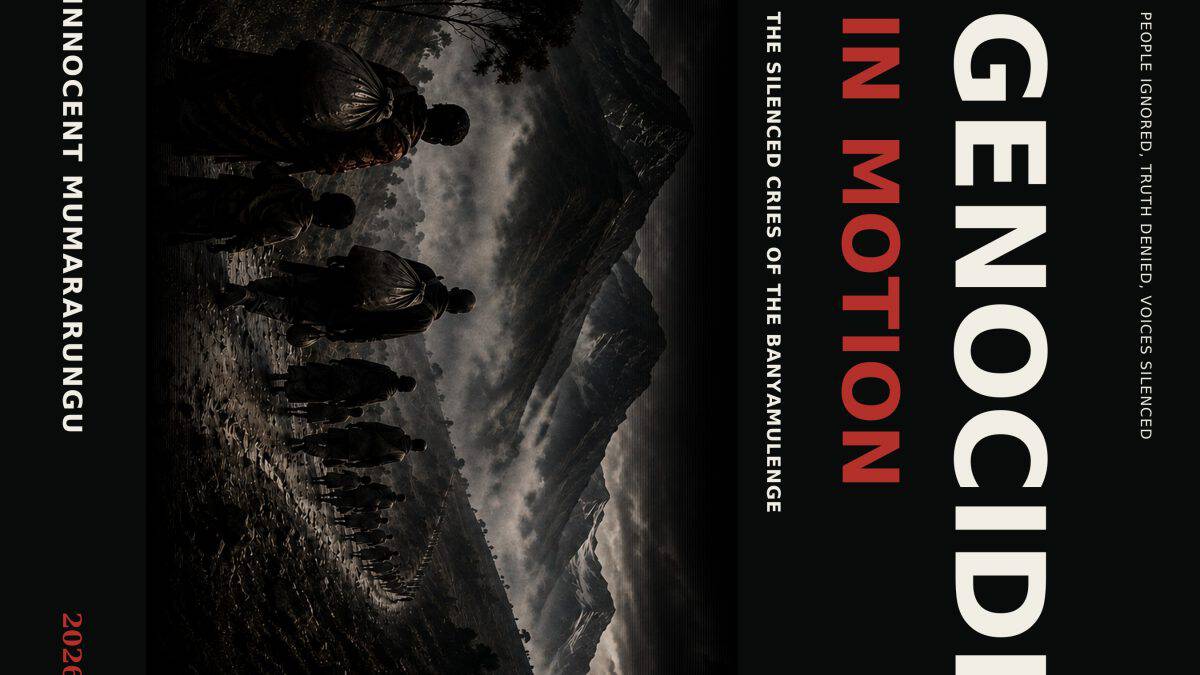
Silence is not neutral when violence is foreseeable. Genocide in Motion: The Silenced Cries of the Banyamulenge examines how a Congolese community was made vulnerable through contested belonging, citizenship disputes, political incitement, armed attacks, displacement, destruction of livelihoods, and repeated failures of accountability.
Drawing on lived experiences, survivor testimony, community records, human-rights reporting, academic research, official documents, and legal standards, the book asks a central question: what happens when available evidence prove warning signs of atrocities, civilians are attacked, and those responsible learn that little is likely to follow? it creates a cycle of impunity. This not only denies justice to victims but can also encourage further violence by reducing the perceived consequences for perpetrators.
The book, Genocide in Motion begins with accounts of the events leading up to the mass killings, emphasizing that violence began long before when first shots were fired. It traces Banyamulenge roots and place-based belonging in the South Kivu highlands, the colonial system of customary authority that left the community without an equivalent recognised chiefdom, and post-independence nationality laws that constantly contested the citizenship of communities perceived as Rwandan and Burundian descents. It also recalls the insecurity of the 1960s, including the Mulele and Simba rebellions, and shows how later political competition, land disputes, regional wars, and the recurring portrayal of Banyamulenge as foreigners turned questions of identity into questions of security.
That history matters because repeated exclusion can make discrimination seem legitimate. When a community is repeatedly and consistently described as foreign, its affiliation to the state, land, political representation, and right to state protection become easier to challenge.
In my book, I do not claim that every episode had the same actors, motives, or legal character. Rather, I document successive waves of violence and atrocities committed against Banyamulenge communities, through these events. The book illustrates how longstanding exclusion, incitement, dispossession, and persistent impunity have progressively undermined the security and protection of Banyamulenge civilians.
1996: when hope shattered
The events of 1996 changed my life; my own family was forced to flee. The paths we had used to attend school, visit relatives, reach markets, and herd cattle became routes of survival. We left behind more than possessions. We left our home, cattle, community, memories, and the familiar world that had shaped our sense of belonging. But Killing of Banyamulenge reaches far beyond my own memory.
The book documents attacks across Uvira and Fizi and in places including Kabela, Kamanyola, Lubonja, Baraka, Lueba, Mboko, Kamituga, Bivumu and Magaja, Kwa Matare, Ikabera, Sange and Bukavu. These episodes involved arrests, ambushes, forced deportation of Banyamulenge to Rwanda, disappearances and massacres.
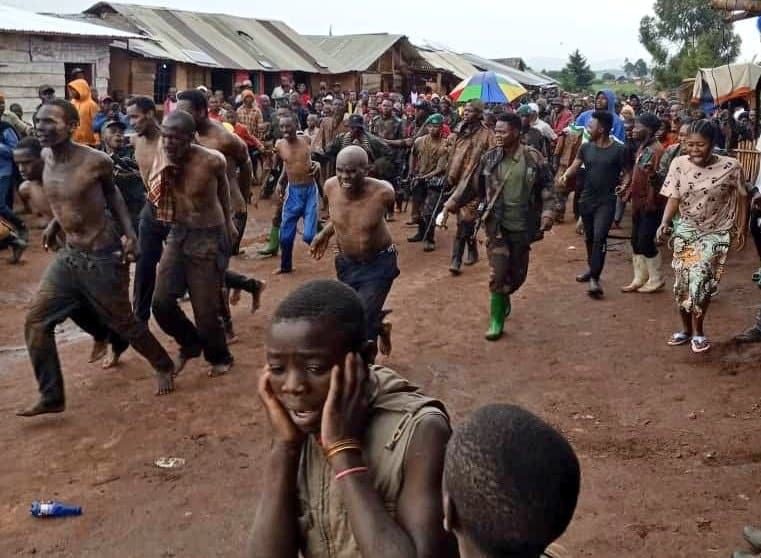
The methods of killing reveal its brutality. Civilians were shot, hacked with machetes and knives, beaten, speared, beheaded, burned alive, drowned in rivers or Lake Tanganyika, and killed after torture or deceptive promises of safe transfer. For instance, at Baraka and Lueba, civilians were attacked with knives and machetes; buildings were set alight with families inside. Survivors transferred toward Mboko described men being bound and thrown into Lake Tanganyika. In Kamituga and along the Zalya River, accounts describe executions followed by bodies being cast into the water. Bivumu and Magaja add burning, drowning and beheading. Kwa Matare is remembered through survivor testimony describing hundreds of victims, including many children.
1998: Massacres and persecution Go Nationwide
The book then follows the violence beyond South Kivu. In 1998, anti-Tutsi incitement and persecution spread across the Democratic Republic of Congo. Banyamulenge trainee soldiers at Kamina were reportedly executed, while civilians in Kinshasa, Lubumbashi, Kalemie, Vyura, Kisangani and elsewhere were arrested, tortured, disappeared or killed.
In Kinshasa, the violence included mob lynchings in which victims were burned alive with petrol-soaked tyres. Other detainees were reportedly tied, weighted and thrown into the Congo River. Elsewhere, victims were shot, stabbed or taken to isolated execution sites. Beyond doubt, the danger became pronounced as West African individuals were targeted because of their physical characteristics. Identity and physical appearances itself could become a death sentence in military bases, detention centres, city streets, homes and forests.
Massacres and Siege
On 13 August 2004, Banyamulenge refugees at the Gatumba transit centre in Burundi were attacked at night. The book describes gunfire, grenades, machetes and fire. Families were trapped in burning tents; other victims suffered gunshot, grenade, and machete wounds, while some bodies were mutilated or decapitated. United Nations figures cited in the book record 152 Banyamulenge refugees killed on site, 106 wounded and eight missing; later counts reached 166 deaths, including those who died from injuries.
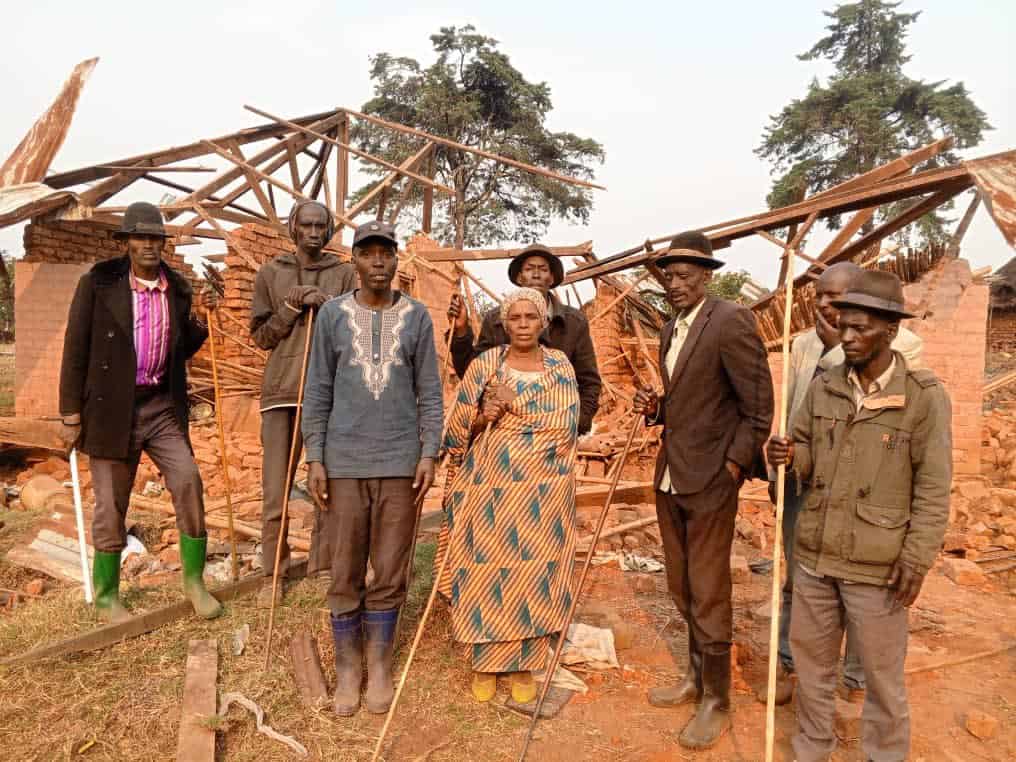
Gatumba remains significant because it raises questions about protection, even under the United Nations High Commissioner for Refugees (UNHCR). Warnings and security concerns existed before the massacre, yet the camp remained exposed. The book treats responsibility carefully, distinguishing documented findings from allegations and unresolved questions, while insisting that uncertainty over complete authorship cannot excuse failure to investigate or protect survivors.
From 2017 onward, renewed violence in the South Kivu highlands involved cattle looting, forced displacement, killings, sexual violence, road blockades, attacks on livelihoods, state killings, and more recent allegations of regional forces’ involvement, amid persistent impunity.
Why silence Rewards Killers
The phrase “genocide in motion” is used as an atrocity-prevention thesis, not as a claim that a court has already adjudicated genocide. The book calls on policymakers, international institutions, and other key decisionmakers to recognise and address the progressive patterns of exclusion, collective blame, dispossession, violence, and denial of justice that place communities at risk of further atrocities. Not every episode has the same perpetrator or legal character; responsibility must remain individual and evidence based.
Silence rewards killers when crimes are documented but consequences do not follow. It rewards incitement when political actors can spread dehumanising narratives without sanction. It rewards repetition when survivors see one atrocity followed by another while accountability remains weak. The political career of figures like Anzuluni Bembe, Lwabanji Ngabo, Muhindo Nzangi, Justin Bitakwira and many others show another way silence can reward incitement: exclusionary rhetoric may bring visibility rather than accountability.
Breaking the cycle requires more than remembrance. It requires protection of threatened civilians and witnesses, preservation of evidence, credible investigation, prosecution where evidence supports charges, humanitarian access, restoration of rights and property, reparations, and public resistance to narratives that make entire communities appear disposable.
The lesson of Genocide in Motion is simple: prevention begins before the next massacre. When warning signs are visible, silence is not caution. It is a risk.
Short Bio
Innocent Mumararungu is a humanitarian leader, researcher, and author from South Kivu, Democratic Republic of Congo whose work bridges lived experience, humanitarian action, and academic research. With over 15 years of experience in humanitarian and international development, he currently serves as Country Director of Plan International Niger. He is pursuing doctoral research at the University of Liège, Belgium. His latest book, Genocide in Motion: The Silenced Cries of the Banyamulenge, combines personal testimony, historical evidence, and human rights research to amplify silenced voices and advocate for justice, accountability, and the prevention of mass atrocities.
Leave a Reply