Summary of Policy Options and Conclusion
Source: css.leeds.ac.uk — War in South Kivu-DRC & Minority Protection: Policy Options
Recently, the Centre for Global Security Challenges (CGSC) published a blog opinion on the war in South Kivu, the Democratic Republic of Congo (DRC) and the protection of minorities. The opinion drew on research in South Kivu, and the key highlights of the April 2025 Bradford Banyamulenge Workshop — a two-day conference co-organised by the University of Bradford and the Office of the Lord Mayor of Bradford. The blog borrowed insights from recent reports by Human Rights Watch (HRW – see also Sept 2025 report), the United Nations Office for the Coordination of Humanitarian Affairs (UNOCHA), and the International Committee of the Red Cross (ICRC). Below are the main policy options shared by Delphin Ntanyoma.
Policy Options
The blog opinion sets out six concrete recommendations for the UN Security Council, the European Union (EU), African Union (AU), East African and Southern Africa regional bodies and bilateral donors to address the crisis facing the Banyamulenge and other minorities in South Kivu’s highlands.
1. Targeted recognition and protection
Based on previous research, existing reports and UN peacekeeping mandates have failed short to capture the specific vulnerabilities of contested groups like the Banyamulenge. Therefore, an independent fact-finding mission would enlighten the UN and other international human rights organisations on patterns of targeted violence.
2. A neutral protective force
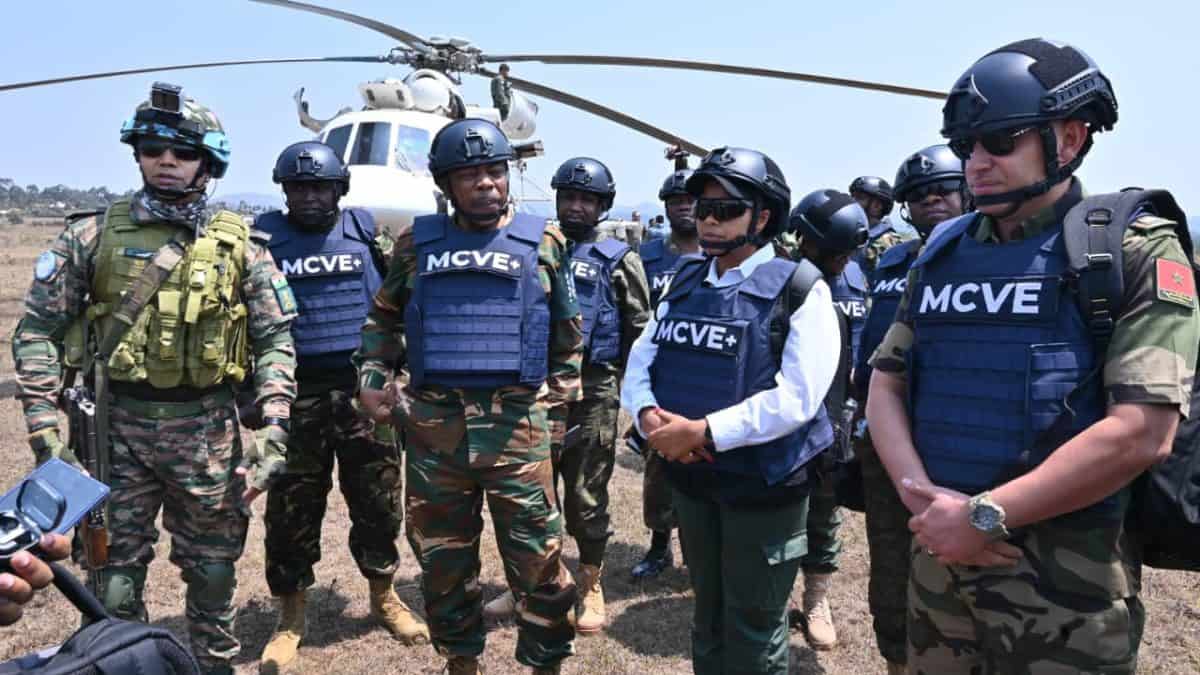
Within the complex regional warfare (DRC, Burundi and Rwanda), local warring parties claim to be defending their own communities. Regional forces including the Congolese national army (FARDC) have largely failed to protect civilians, including vulnerable groups. Therefore, it is important to think about a neutral force in the Highlands that would offer some guarantees to all sides.
3. Humanitarian access with accountability mechanisms
Beyond general appeals, the international community, the group of mediation – the United States and the African Union – and human rights bodies should make sure that all warring parties comply to the international humanitarian law. Warrying parties should be summoned to open humanitarian corridors and make unhindered humanitarian assistance passage.
Meanwhile, DRC, Burundi and Rwanda should be held accountable for the ongoing humanitarian blockades. Sanctions need to be extended to military commanders who are or have been responsible for blocking humanitarian assistance and the use of drone strikes on civilian areas should be prohibited.
4. Prevent the proliferation of guns and ammunition
There is documented evidence that Congolese armed forces (FARDC) have supplied weapons and ammunition to local combatants and militias, some driven by resentment toward communities such as the Banyamulenge. The rebel group has been training thousands of combatants whose future is also uncertain due to the experience of previous rebellions. The presence of foreign armed contractors and mercenaries come with risks of transferring more sophisticated military technology into the hands of uncontrolled combatants, pushing eastern DRC toward what some analysts term “Somalisation.” There should be mechanisms to prevent the proliferation of guns and sophisticated military technologies.
5. Resolve citizenship rights
Despite progress in the 2006 Congolese constitution, the Congolese citizenship law is still flawed and rightly criticised on how it connects nationality with ethnic territories. Until revised, the citizenship law stands as a legal framework that enables discrimination and exclusion for communities whose territories have been merged into their “rivals”. The blog opinion argues that a long-term Congolese stability requires dissociating citizenship from ethnic territories and revisiting Article 10 of the constitution, along with abolishing ethnic territories.
6. Community voices and participation in knowledge production
Across media and reports, the dominant narratives about eastern Congo are shaped primarily by regional-actor dynamics interpretations of causes of conflicts as well as the presence of extractable natural-resources. To avoid responsibilities, actors prefer to name conflicts as thoroughly intercommunal and inter-ethnic. Strangely, media and international organisations give limited spaces to marginalised communities’ voices and lived experiences are largely unaccounted for. Therefore, it is important to involve and listen to local communities, including marginal ones. This is highly important when it comes to the production of knowledge. Community and marginalised voices can dispel the dominant stories that blame all to communities. Failing to challenge this approach will reproduces the power asymmetries that sustain cycles of violence.
Conclusion
The involvement of nearly all neighbouring countries in the 1998–2003 war led to it being dubbed the “Africa World War,” followed by the 2003 Sun City accord and the creation of the MONUSCO peacekeeping mission. Despite these efforts, violence in Ituri, South Kivu, and North Kivu has persisted since the 1990s.
The South Kivu highlands represent one of the most acute and most neglected humanitarian and protection crises in contemporary Africa and have become an epicentre of local and regional confrontation. A long-term, sustainable resolution requires looking beyond the headline dynamics of the DRC conflict to address the protection needs of communities most systematically exposed to violence. Preventing further escalation in South Kivu and addressing Banyamulenge vulnerabilities is framed not only as a moral imperative but as a regional security interest: communities denied justice and protection do not simply disappear — they may become instruments for future cycles of armed mobilisation.
Author: Delphin Rukumbuzi Ntanyoma, published 10 August 2026 on the Centre for Global Security Challenges blog, University of Leeds.
Leave a Reply