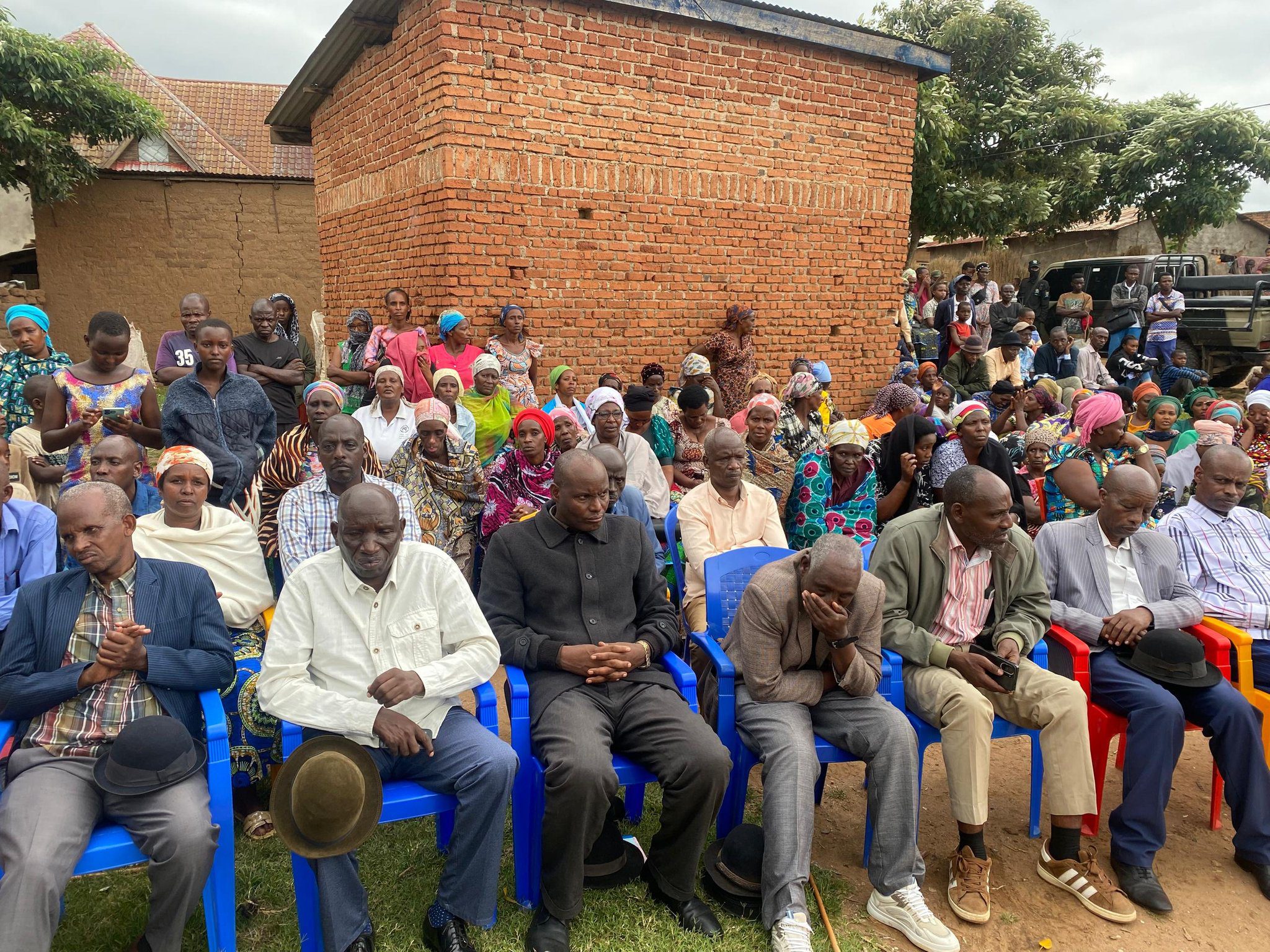
In January 2026, a U.S. Congressional hearing on peace in the Democratic Republic of Congo (DRC) and Rwanda briefly shone a spotlight on the Banyamulenge — a Congolese Tutsi minority community in South Kivu that has endured years of violence, displacement, and international neglect. But the moment of recognition carried a dangerous flaw: the Banyamulenge were referred to as a community that “supports M23.” That association is not just factually wrong — it is politically dangerous. Conflating an entire civilian ethnic community with an armed rebel movement obscures the real history of Banyamulenge resistance to M23, dilutes the responsibility of those who have committed violence against them, and risks legitimising further attacks on civilians as “reprisals.” This article examines the evidence, traces the history of Banyamulenge relations with rebel groups from CNDP to M23, and explains why accuracy in this distinction is not merely academic — it is a matter of life and death.
-
Congressional Hearing
On January 22, 2026, the U.S. House Foreign Affairs Africa Subcommittee held a hearing in Washington, D.C., titled “Advancing Peace in DRC and Rwanda through President Trump’s Washington Accords.” During the hearing, Rep. Sarah Jacobs, the single Representative who referred to the question of the Banyamulenge, claimed that “… and, we are now receiving reports of reprisal attacks against the Banyamulenge, a Congolese Tutsi community and other civilians accused of supporting M23 by the Wazalendo and other…” Thanks for her courage to speak up on behalf of voiceless. However, the association of the Banyamulenge with M23 is dangerous but also unsubstantiated and may seem to justify violence against at-risk civilians.
-
CNDP to (2012-13) M23
M23 (Mouvement du 23 Mars) is an offspring of Conseil National pour la Défense du Peuple (CNDP) of Laurent Nkunda. Since 2009, Nkunda has been in prison in Rwanda. CNDP and M23 claim to act in defense of Tutsi populations in the eastern Congo. However, it has been documented that the Banyamulenge have reluctantly joined CNDP (one or two military officers) and have largely rejected the M23 (2012-13). Banyamulenge Military officers, within the Forces Armées de la République Démocratique du Congo (FARDC), have been at the frontline to combat CNDP and M23.
While Banyamulenge, political and military elite can differently interpret discrimination and persecution of their community and Congolese Tutsi in general, many rejected CNDP and M23 due to how “AFDL and RCD rebellion have brewed distrust against Rwanda, which many [believed was] behind the M23 rebellion.” Besides individual ambitions, community leaders, elders, and civil society representatives have in addition emphasized peaceful resolution of local conflicts.
-
Hardly convinced to “align” to M23 (2021)
Despite Banyamulenge elite (military and politicians) opposition to CNDP and M23, their security has continuously deteriorated. Civilian populations in southern South Kivu (Fizi, Mwenga-Itombwe, and Uvira territories) have been attacked, villages and cattle destroyed. Their security situation has not changed even when the last structured armed group integrated the FARDC in 2010-11. Instead, their security situation drastically deteriorated from 2017 onwards. The 2017 violence has been unique in terms of destruction of homes, cattle and social infrastructure.
-
“Association with M23” dilutes perpetrators’ responsibility
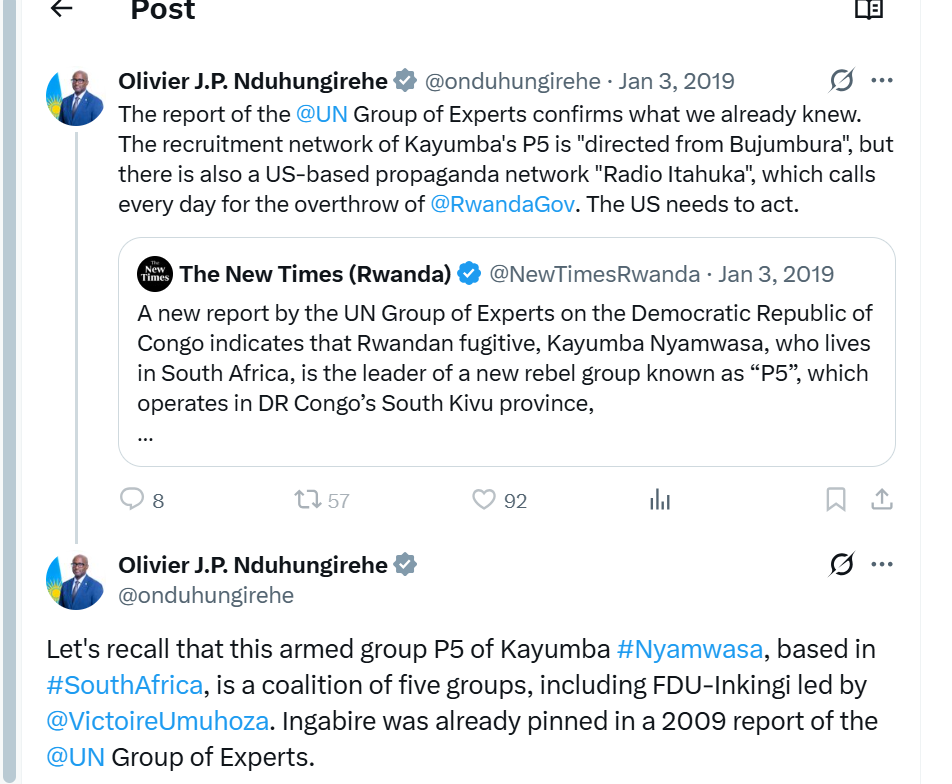
A collective association of the Banyamulenge community with M23 reminds the false association and collective guilty they have been accused of in relation to P5-Rwanda National Congress (RNC) of General Kayumba Nyamwasa. The 2015 regional confrontation between Rwanda and Burundi, new rebel groups emerged in South Kivu, including Red-Tabara. The Burundian rebel groups actively operating alongside local militias in southern South Kivu. Evidence indicates that Red-Tabara received logistical and financial support from Rwandan security services. Meanwhile, Burundian security services backed Rwandan rebels affiliated to Kagame’s opponent, General Kayumba Nyamwasa known as P5-RNC.
Rather than calling for civilian protection, Media outlets diverted attention to countries’ political and security interests. Since then, the plight of the Banyamulenge civilians who lost almost everything is subsumed in this debate of armed groups’ confrontation. Perpetrators’ responsibilities are diluted in this discourse and narrative that rewards the killers. Associating the Banyamulenge with M23 rewards perpetrators of violence, as their actions are perceived as reprisal attacks.
-
Risks behind the Dangerous Association
Would you work on a linkage of Banyamulenge and the current RDC armed groups? Including: Mai mai, FDLR and all mercenaries?
Can I request an explicit form of your question.
[…] particularly dangerous dynamic is the recurrent tendency to conflate the Banyamulenge population with the government of Rwanda or with arm…. This association is made in political rhetoric, media commentary, and local mobilization […]
[…] and 2022, repeated attacks targeted civilians, particularly members of the Banyamulenge community. Militias affiliated to self-styled authochthonous ethnic communities: Babembe, Bafuliro, Bavira and Banyindu… […]