
After almost SIX months of total blackout, local populations in #Minembwe have begun using Starlink broadband internet and communicating with relatives and the outside world. In modern humanitarian crises, communication is not a luxury—it is a necessity. Without it, populations become invisible, and invisible crises often worsen.
For roughly a decade now, the southern South Kivu and Minembwe particularly have experienced persistent violence that erupted in 2017 and attained its peak in 2019. Beyond insecurity, destruction of villages, cattle looting and forced displacement, the region has been subjected to a devastating humanitarian blockade. For more than a year now, almost all supply routes have been disrupted to the extent that there is no way to buy basic products such as salt, soap or sugar.
On top of that, Minembwe has been cut off from telecommunications. Since November 2025, there has been a total blackout in Minembwe. No mobile telephone service is available. No internet, and it is completely impossible to make or receive a phone call. The blackout has compounded an already dire situation. Families separated by violence or relatives abroad have been unable to confirm whether loved ones are still alive as the fighting intensifies and warfare relies on drones.
Humanitarian actors and international organisations such as the International Committee for the Red Cross, Doctors without Borders or Doctors of the World have struggled to gain access to the region. Health and medical facilities are running out of supplies as life-threatening csualties are dying from injuries that could have been treated. Communities living under siege have been left in isolation, uncertainty, and fear.
- Elon Musk’s Starlink: mitigate suffering?
I recently learnt that a fragile lifeline has emerged. Local populations have begun using Starlink broadband satellite connections to communicate with relatives and the outside world. There are currently four mobile Starlink satellite units available for local populations, provided they pay for the services. Though limited in terms of coverage, availability and accessibility, the Starlink technology has allowed some families to reconnect after months of silence and distress.

At least, a few people can text WhatsApp messages or have a call, though it remains extremely expensive compared to the prevailing socio-economic conditions of local populations. The payment is estimated at around $ 2-3 (5,000 Congolese Franc) for 45-60 minutes. Considering the socio-economic context, this is too expensive and hard to afford. In some situations, local populations have opted for cost-sharing.
The presence of Starlink satellite internet in Minembwe demonstrates how technological innovation can help alleviate humanitarian challenges. It at least eases distress. Though uncertain, Starlink is allowing families to coordinate support and assistance where possible. A message dropped from one person in Minembwe is shared among relatives and friends within the diaspora. It can make a minor difference.
2. Call for action
Though hard to afford, Starlink is expected to help families reconnect. It is not a lifeline. It cannot push for humanitarian access. It cannot substitute collapsed social and medical infrastructures. Let alone, Starlink cannot deliver food, medicine, or shelter. Starlink cannot replace the urgent need to reopen humanitarian corridors and restore supply routes.
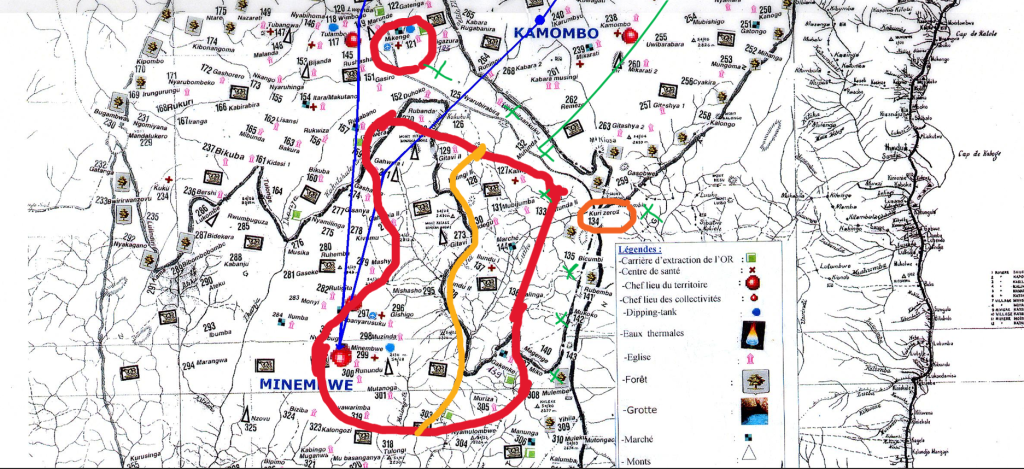
Local populations in Minembwe and its surrounding areas still face shortages of basic needs. There is an extreme rising price for unavailable products. The humanitarian blockade continues to deepen vulnerability, particularly for children, the elderly, and displaced families.
This is a call for attention, solidarity, and action. Heads of States in the African Great Lakes region, regional organisations, humanitarian actors, policymakers, and international partners must prioritise safe access to conflict regions in South Kivu, including Minembwe. Belligerents should comply with the international humanitarian law so that assistance to civilians is facilitated. The international community must listen—and act—before it is too late.
Delphin R. Ntanyoma
Twitter: https://x.com/Delphino12
Blog: https://easterncongotribune.com/
Leave a Reply