Aubin Minaku: Brazilian Defender Whose Benchmarks are King Leopold II & President Mobutu

Aubin Minaku is the Speaker of DRC Parliament, the low chamber since 2012. He is a professional lawyer, working on his PhD thesis in the area of international law. A political figure who evolved quickly from expertise to political appointment based on his talents and aptitudes.… Read the rest “Aubin Minaku: Brazilian Defender Whose Benchmarks are King Leopold II & President Mobutu”

De Robinson à Djinnit : Changement Climatique & Désillusion du « Paradis Terrestre»

 Alors que le temps presse, l’espoir de vivre et de jouir de ce « Paradis Terrestre » qui est la République Démocratique du Congo (RDC) ne cesse de perdre son sens. Cette déception me laisse penser que l’urgence du changement climatique, ses complexités et contours feront que je revive ce sentiment de ceux qui ont longtemps en vain attendu l’« Objectif 80 ».… Read the rest “De Robinson à Djinnit : Changement Climatique & Désillusion du « Paradis Terrestre»”

Mabunda Lioko: Challenges on Sexual Violence Eradication in DRC

It was on 23/10/2013 during the closing remarks of the National Consultations (Concertations Nationales), that President Joseph Kabila Kabange announced a forthcoming nomination of his special representative/advisor in charge of eradicating sexual violence and child forced enrolment into armed groups.… Read the rest “Mabunda Lioko: Challenges on Sexual Violence Eradication in DRC”

1990 : Quand la Coupe du Monde s’organisa dans mon Village

La coupe du monde est un avènement extraordinaire dont vous aurez la chance de suivre pas plus de 9 fois dans ce grand pays de l’Afrique centrale. Pour une personne enthousiaste qui trouve l’intérêt de la suivre à l’âge de 12 ans, compte tenu de l’espérance de vie dans ce pays, l’intermittence de son organisation vous contraint à ne pas aller au-delà de ces fois citées-haut.Read the rest “1990 : Quand la Coupe du Monde s’organisa dans mon Village”

Mutarule Massacre: Culture of Impunity or Security Blunder?

 The Mutarule killing, as nth massacres in the region, happened on 6-7/06/2014. In July 2012, in the same village, 5 people were killed during clashes between Bafuliro and Barundi; conflicting over chieftaincy management. The Mutarule killing culminated in 38 deaths including women and children, dozens of injuries, houses were also burnt.… Read the rest “Mutarule Massacre: Culture of Impunity or Security Blunder?”

Libéralisation du Secteur d'Electricité en RDC: Alternative à la Faillite?

Image

La République Démocratique du Congo (RDC) étant un gigantesque énergétique, elle renferme tout au moins 52% de l’ensemble des eaux africaines. Alors qu’elle a plus de 500 sites de production hydro-électrique, le pays a toujours du mal à servir sa population en matière d’électricité et en eau potable.… Read the rest “Libéralisation du Secteur d'Electricité en RDC: Alternative à la Faillite?”

Not Improve My Lingala Speaking Until Convinced

State interests have to be well considered beyond individuals’ and particular groups’ interests. On one hand, when a state’s interests are mixed up and overwhelmingly dominated by those of some privileged and greedy people, there comes disagreement in terms of qualifying such a state.Read the rest “Not Improve My Lingala Speaking Until Convinced”

Uvira all stars – Karibu Uvira, uva-unit:

http://www.youtube.com/watch?v=HAO0eJ27fUE&feature=share

Hawa ni vijana wa Uvira (Sud-Kivu/DRC). Waza hawa vijana gisi wanavyo perform, wangepata uwezo napesa za kuendeleza kazi ya uimbaji? Wanaonyesha kama vijana wana uwezo wa kuyigeuza inchi ya vita na ubaguzi mara nyingi nakuyielekeza kwenye muelekeo muzuri wa maendeleo na kuishi pamoja. Ningefurahiya kuwaona vijana wengi wakiendeleza umaarufu wayo kwakuyielekeza inchi kwenye amani.
Wengine vijana kama hawa wamepoteleya kati yamakundi yenye silaha kabla wangefanya kazi mbali mbali kama hizi zinazowasaidiya kuendeleya. Ndiyo maana hawa waimbaji wanaomba viongozi kuijali Uvira. Munaziona barabara kwenye video zimebomolewa, hospitals zimeisha, masomo wazazi wanajilipiya, vijana wanakosa kazi na mengine kama hayo. Na siyo Uvira tu, fasi nyingi Kongo ni kama hivo. Kwanini viongozi wahawezi kuyigeuza hali hiyi? swali lakini sipati jibu haraka.
Ninachokiweza kama msaada nikuyiweka video hiyi kwenye blog.
Aksanti sana vijana wa UVIRA

[polldaddy poll=7990138]

Ntaganda, Katanga, Lubanga, Ngudjolo…: From Battlefield to ICC

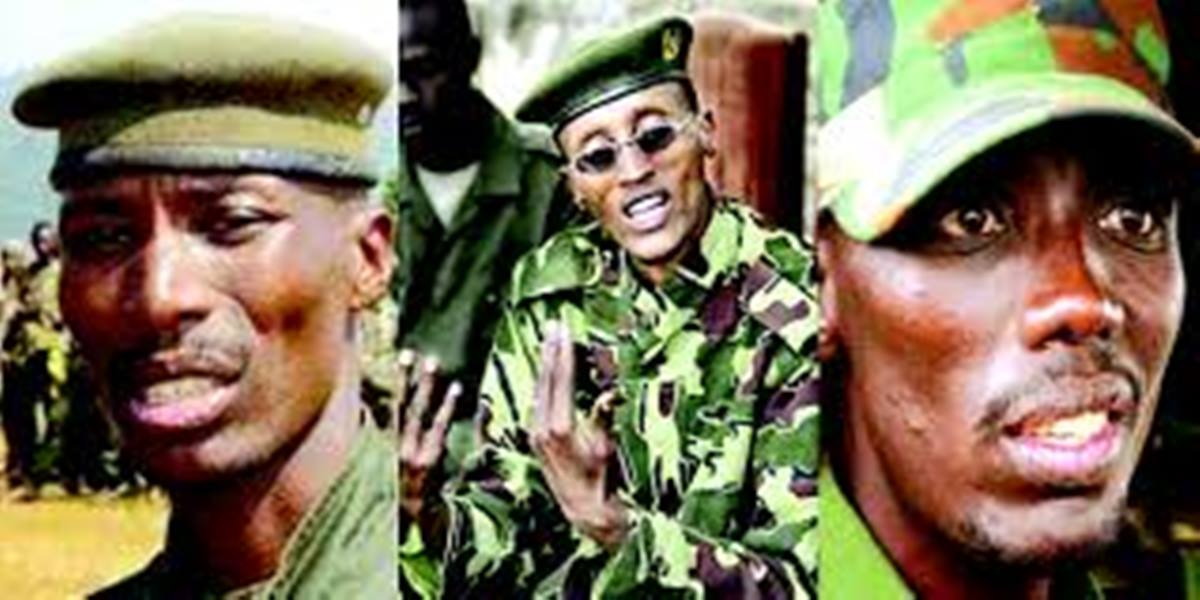
The International Criminal Court (ICC) has convicted Germain Katanga on 23/05/2014 for war crimes and crimes against humanity. Though the court allows an appeal for this judgment, he got sentenced for 12 years (including those spent in jail in Hague) for crimes committed in Ituri region around 2003.… Read the rest “Ntaganda, Katanga, Lubanga, Ngudjolo…: From Battlefield to ICC”

Visite de Joseph Kabila à Paris: De la Méfiance au Rapprochement Politique


 Enfin, voici le communiqué de la visite du Président Joseph Kabila à Paris (suivez le lien ici). A vous d’ en jugez la portée vis-à-vis de vos attentes.

Il vous est arrivé de chercher de comprendre les calculs politiques?… Read the rest “Visite de Joseph Kabila à Paris: De la Méfiance au Rapprochement Politique”

Mutebutsi, Udjani & Morgan: Raisons de Décès & Incertitude

Il peut sembler presque “immoral” de parler à propos des personnes qui nous ont quitté dans cette vie et surtout en se référant à l’attitude humaine, africaine et particulièrement congolaise de respect envers les morts. En plus de cela, il est à souligner que quelles que soient les crises que traversent nos sociétés ces dernières années, nous n’avons pas non plus à nous réjouir devant la disparition de celui que quelqu’un peut considérer comme auteur, d’une manière ou d’une autre, de faits qui lui a endeuillés.Read the rest “Mutebutsi, Udjani & Morgan: Raisons de Décès & Incertitude”

Mothers in DRC: Equally Valuable & Stand for a State Substitute

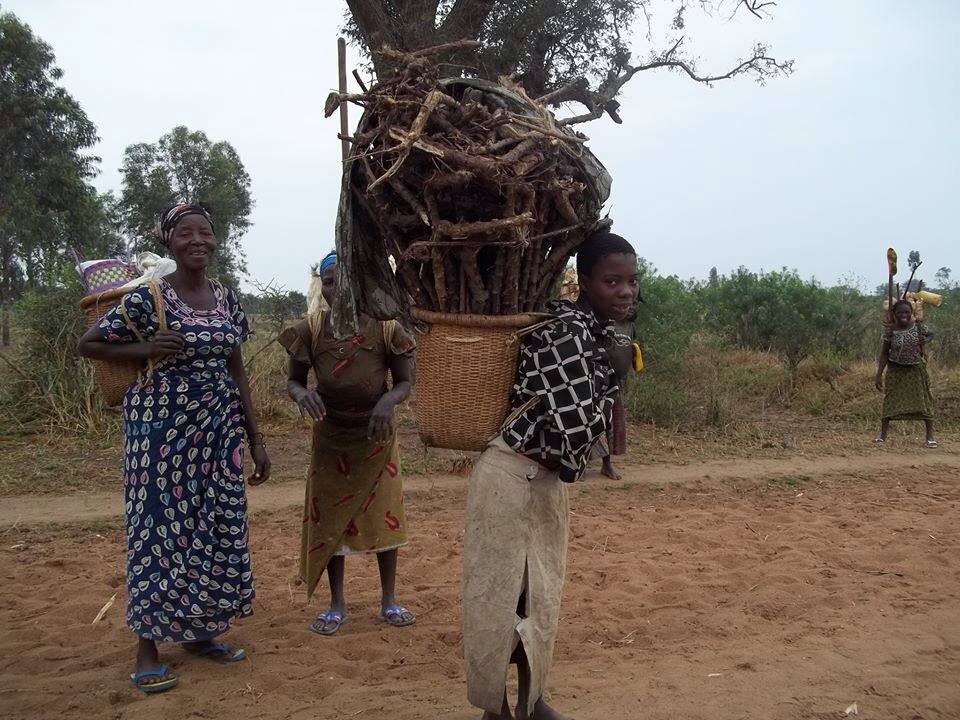
It may sound as riddle when comparing mother versus the “State”. However, it tends to be clear for anyone familiar with the case of Democratic Republic of Congo (DRC) if s/he has witnessed a functional state in the proper sense that a “state” can be compared to different things due to the late failure.… Read the rest “Mothers in DRC: Equally Valuable & Stand for a State Substitute”

John Kerry in DR Congo: Electoral Process between the Devil and Deep Blue Sea

John Kerry’s Visit to DRC: Hanging the Electoral Process between the Devil and Deep Blue Sea. The United States’ Secretary of State has visited the Democratic Republic of Congo (DRC) last week, on 03-04/05/2014. The purpose of the visit of John Kerry can be summarized as focusing respectively to electoral process and the country’s stability in the short-medium and long terms.

The visit has emphasized on dismantling foreign armed groups operating in DRC as well as reintegration mechanisms of local ones. The visit intended also to discuss the electoral process and democratization as the host country plans to hold general elections in 2016. Nevertheless, it sounds that the US stance on presidential mandate limits and constitutional revision looks hanging the electoral process within the hammer and anvil when considering the current socio-political context.

The most shaking and mediated message from the meeting of the president Joseph Kabila and the Secretary of State was about revising the constitution. The US delegation has openly disagreed on the third presidential term of the incumbent head of the state. The delegation has clearly announced, during a press conference, that any constitution amendment favoring individuals than the Congolese society wouldn’t have a support from the US. As the media expected to recapture this message made few months ago by the US special envoy to great lakes region, Russ Feingold; it went again asked to get clarification from the State Secretary himself. The US take on that question was very clear as it went expressed; the reason of being largely mediated. However, though slightly discussed, the visit of John Kerry has stressed much on the stability and peace in DRC. His statement reveals the US concern over peace and stability as stated in his message that “peace cannot be delayed or deferred or denied, and I think the people of Congo – of the Democratic Republic of Congo made that clear”.

The statement of the Secretary of state believes that “lasting peace will not grow out of the barrel of a gun. It will come from restoring state authority and state services, and providing the capacity building that is necessary in those areas that have been recaptured from armed groups. It will also come from demobilizing the combatants and returning them to civilian life”. Consequently, the link between state services and state authority are intertwined processes and this viewpoint may unlikely be contested. That is, his interpretation of the “state role” would have drawn much attention to his interlocutors as well as the media.

Based on my interpretation, the blog’s expectations3 from the John Kerry’s visit are likely close to the message delivered from his delegation. What remains is the responsibility of DRC leaders and the commitment of ordinary citizens to hold rulers accountable; a tough struggle that we don’t ever have to give up. The blog is still insisting on making viable the DRC state so that it provides public services through mechanism that are freed of nepotism, patronage and despotic decisions. The blogger considers that the engine of change lies into the Congolese’s hands. Nonetheless, this article discusses the probable scenarios that would arise from John Kerry’s and US take on respecting the current constitution and presidential mandate limits than discussing his clearly stated point of views.

On one hand, president office is the most enviable position in DRC as it makes the occupant powerful than the state; but it is also a source of wealth accumulation sometimes illegally. Thus, politicians and political parties must use all means to reach and keep president office for a longtime, regardless of their achievements. Therefore, the take of US will possible lead the ruling party (Parti du Peuple pour la Reconstruction et le Développement: PPRD) to deepen their strategies/maneuvers in order to rule the country for next years or ‘unlimitedly’. In the meantime, these maneuvers would affect the forthcoming government formation. Hence, the government of ‘national cohesion’ would be affected in terms of its composition as well as delaying in time its announcement again.

Furthermore, as members of the ruling party have yet compromised on who will be their 2016 presidential candidate; the US take would have twisted those supporting the third term of Joseph Kabila with the moderate ones opting for another figure to run. Consequently, it’s likely to expect some split, dissidence and resignation in a near future within the ruling party. Any possible disagreement within the ruling party could cover regional and ethnic tone as most of political parties in DRC are constructed on these grounds. In addition, informed observers wouldn’t rule out the opposition of Katangese politicians within the PPRD as they would unwillingly accept to “lose the power”. There might be a possibility for Katanga’s politicians to oppose any other presidential candidate outside of their provincial circle in case the current wouldn’t run.

On the other hand, the US position will largely affect and weaken the opposition parties. Rather than forming a synergy around one presidential candidate, most of key opposition parties will probably seek to run on their own as they would expect to raise the chance of winning elections if President Joseph Kabila won’t run for the third term. Subsequently, a struggle to occupy the famous president office from dispersal approaches would at large create divergences and divisions within the opposition. It is worthwhile to point out that opposition parties are currently divided between ‘younger’ politicians (of late 90s) who consider themselves as a new generation of leaders and those ‘charismatic’ opposition leaders of 60s. On the other side, some opposition leaders are moderate while others are roughly dubbed as radicals. These characteristics of the opposition couldn’t facilitate them to elaborate a common front for winning 2016 elections.

Experiences of past elections as well as current developments seem to raise skepticism over fair and transparent future processes. Specifically, 2011 elections were characterized by violence and confrontations among political partisans to the extent it involved security services into these violence. So long as security services can side on one of the parties, they remain on center of struggle to get controlled by political leaders. Instead of standing neutral and impartial within the electoral processes, security forces are likely to be biased, hence complicating the process. Within the next coming days, the security services will be subjected to reshuffle to ascertain that the process won’t fail on the side of rulers. Subsequently, it would be better for security services to stand neutral and siding with people’s willingness. Otherwise, the current socio-political context may not assure an observer to get the whole process calm and peaceful.

Though nothing has yet confirmed that PPRD will nominate another candidate than Joseph Kabila, the struggle towards 2016 president office is unlikely guaranteeing an ordinary citizen and her/his welfare. It seems fair to think that alternating individuals in a position would assure the change if problems facing the country have originated from that one leaving the office. This assumption would unlikely explain the case of DRC as some of the current challenges it faces found their origins long before the independence and mostly during Mobutu’s era. Nevertheless, it would be an important step made towards democracy if the ruling party accepts to alternate peacefully. Nonetheless, there is yet a need to undertake a comprehensive and wide approach to bring confidence over the fate of ordinary citizens.

The blog still advocates for the easing and ceasing power struggle in Kinshasa through de-concentration of power to viable provinces. The power concentration in Kinshasa hasn’t yet been explained and it remains unfortunate as long as the population strives to access basic needs and infrastructures; while rulers are accumulating illegally national wealth. Consequently, the blogger believes that there is yet an imperative necessity to work on mechanisms that can guarantee quick services provisions, outside of despotic decisions; while considering socio-cultural diversities of DRC. The forthcoming process looks as a test of matureness for DRC politicians and leaders. It is an opportunity to prove their experience all along the struggle to lead the country. Thus, their efforts to reach and keep president office must be accompanied by a convincing plan to tackle challenges we’ve been facing. Moreover, it is an opportunity for military and political leaders to assure that their failure won’t found scape goats within the socio-cultural diversities.

Do you think the discussion is pessimistic and you still expect any change as 2016 approaching? Or you feel too that the future electoral process in DRC might be entering in dilemma? Your contribution and opinion are needed for our bright future.


Delphin R. Ntanyoma

Twitter: https://x.com/Delphino12

Blog: https://easterncongotribune.com/

Procès d’un Viol en Masse à Minova: Test de la Justice sous-Pression Internationale

Le verdict du procès de Minova est tombé hier le 05/05/2014. Il s’agit d’un verdict du procès de viol en masse dans la localité de Minova à quelques kilomètres de Goma. Ces aberrations ont été commises par les militaires de l’Armée Nationale (FARDC) en Novembre 2012 après avoir abandonné la ville de Goma face à l’avancée du M23.… Read the rest “Procès d’un Viol en Masse à Minova: Test de la Justice sous-Pression Internationale”

My Vulnerable Voice to John Kerry: If they Can’t Afford, Tell Them to Step Down

The United States Secretary of State John Kerry is visiting Ethiopia, Democratic Republic of Congo (DRC) and Angola from 29/04-05/05/2014 as announced by a press release from the State Department. His visit lies within USA efforts to stabilize mostly the great lakes region; reason why the region has recently gained much attention from the international community as well as the US.… Read the rest “My Vulnerable Voice to John Kerry: If they Can’t Afford, Tell Them to Step Down”

Expulsion des Zaïrois par le Congo-Brazza: Pression d’un Médiateur/ Facilitateur ?

Image

Un drame à distance ne se conçoit pas à sa hauteur mais elle reste toujours un drame. Imaginez un bon matin sans aucun préalable avis, quelle que soit votre irrégularité, vous vous retrouvez en face des policiers et militaires vous obligeant sans discussion d’emballer vos affaires.… Read the rest “Expulsion des Zaïrois par le Congo-Brazza: Pression d’un Médiateur/ Facilitateur ?”

Quand les Faits sont Têtus: Avertissement pour l’Est du Congo et le Grands Lacs d’Afrique?

« Les faits sont têtus » est probablement l’expression tirée chez Vladimir Ilyich Ulyanov, dit Lénine. Cette expression a été récemment citée par le chef de l’Etat rwandais lors des cérémonies de commémoration du génocide contre le Tutsi. C’est au cours du 20e anniversaire commémorant le génocide au Rwanda que cette expression, datant d’un siècle, est rappelée au public pour exprimer un désagrément ou une consternation dans un discours tant attendu par les observateurs.… Read the rest “Quand les Faits sont Têtus: Avertissement pour l’Est du Congo et le Grands Lacs d’Afrique?”

×