
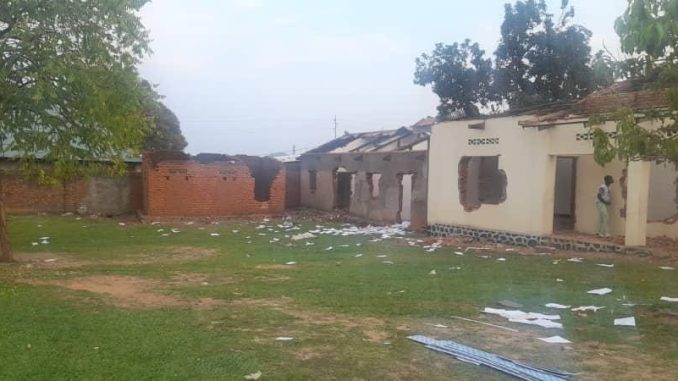
On January 17, 2026, M23 (Mouvement du 23 Mars) announced to withdraw its military forces (observation and monitoring units) from Uvira city. As parts of its military campaigns in the Eastern Democratic republic of Congo, M23 captured Uvira city on December 10, 2025, pretending to, among other things, protect the persecuted Banyamulenge.
Following its withdrawal, at least 30 homes belonging to Banyamulenge civilians, four churches and premises of Eben Ezzer Ministry, a local Non-Governmental Organisation (NGO) were deliberately ransacked and destroyed. These homes include those belonging to military officers within the Congolese armed forces (FARDC). The dominant narrative around the destruction will likely be that homes and churches were destroyed because of the violent climate and that locals were revenging atrocities committed by rebels. Looking back to the prevailing socio-security context can help understand the motivations behind the destruction.
- Attacks on Banyamulenge Churches in 2021
On September 9, 2021, thousands of demonstrators gathered in Uvira city in a protest that rapidly escalated into targeted violence against Banyamulenge individuals and properties. Representatives of local civil society organisations in collaboration with the Uvira city’s mayor, Kiza Muhato, organized the protest to initially contest the “coronation” of a Banyamulenge traditional chief of Bijombo groupement, Furaha Kabarure.
Furaha is a son of Obed Kabarure Sebasonera, the later died in August 2021. As his father, Furaha is still contested because members of the Banyamulenge, are not entitled to lead and manage traditional and customary local entities. This is the sense of being “strangers – foreigners” in your own country, the Democratic Republic of Congo (DRC). Until his demise, Obed Kabarure was contested since 1969.
Furaha’s coronation has taken place in Bukavu, a few days before the protest. On Septmber 9, 2021, the protest degenerated into attacks on individuals and homes. Demonstrators alongside local authorities such as the city mayor reportedly hunted down Banyamulenge civilians in the city. On that day, multiple homes, including CADEC, a church whose congregation largely comprised Banyamulenge members were again targeted and partly destroyed. This goes beyond contesting the coronation as attacks targeted churches and homes of families who likely have nothing to do with the coronation.
- Burial of Col Gisore and Yvone Nyamahoro
Colonel Patrick Gisore was a senior military officer in the Armed Forces of the Democratic Republic of the Congo (FARDC). On August 16, 2025, Col Patrick Gisore and his wife, Yvonne Nyamahoro, died in a plane crash when leaving Lubutu to Kisangani.
The family and FARDC Chief of Defense decided to bury the deceased in Uvira. The burial ceremony of Col Patrick Gisore and Yvonne Nyamahoro, both members of the Banyamulenge community was to take place on August 26, 2025, in Uvira where they had close relatives. As most people who came to honour the memory of the deceased were Banyamulenge civilians, local populations in Uvira, and Wazalendo militias blocked roads and vehicles.
Based on ethnic affiliation, many were forced to return to Bujumbura – Burundi where they came to attend the funeral service. Amid these tensions, gunmen attacked one of the churches destroyed Yesterday. It was targeted for hosting the religious funeral service.
As the situation became tense and relatives distressed, the burial was postponed and organised after a few days. Many relatives and members of Col Gisore and Nyamahoro’s families had no chance to pay final respects to the loved ones. Because of their ethnic affiliation, the deceased and their relatives were collectively portrayed as “M23” sympathisers. The colonel has served within the Congolese armed forces for more than thirty years.
- Contestation of Gen Olivier Gasita
In September 2025, FARDC’s nomination and appointment of General Olivier Gasita in Uvira triggered fierce contestation. Several Wazalendo militias and armed groups’ commanders claimed publicly that they do not want to see an FARDC general whose physical appearance is like a “Rwandan, Tutsi or M23 sympathiser.”[1] Local claims referred to his physical appearances, calling him “Rwandan” or Tutsi as reasons the General is not accepted in Uvira.
Within days, local populations and members of civil society organisations joined the “rally” and organised demonstrations in support of Wazalendo’s claims. On September 8, 2025, Uvira’s residents and civil society organisations organised a demonstration. The discourse changed and they started to blame Olivier Gasita for having plotted to let M23 rebels M23 capture Bukavu. The capture of Bukavu by rebel groups intended to cleverly justify the contestation of an FARDC officers based on his ethnic affiliation. In Uvira, Human Rights Watch documented abuses and attacks on the Banyamulenge civilians who had nothing to do with the FARDC decision to appoint General Olivier Gasita. Beyond what was an individual issue, the Banyamulenge were collectively attacked, including children.
- Destruction of homes: patterns to expel “invaders”?
Following M23 withdrawal, the destruction of homes has continued till Yesterday evening (19/01/2026). Fearing for their security and safety, Banyamulenge civilians fled the Uvira city towards Kamanyola-Bukavu-Goma and Rwanda. Many left the city the night of September 17-18, 2026. Some sources claim that Banyamulenge civilians were ordered by M23 to leave the city as they withdrew. A few Banyamulenge families have remained in Uvira. It is yet hard to confirm if they were unable to flee because of the short notice or if they felt safe under the FARDC/Wazalendo. It has been reported that some of those who remained in Uvira were caught on their way fleeing the city.
#Uvira: scènes de destruction, pillages des maisons de ceux qui sont considéré(e)s comme #Banyarwanda, donc #Banyamulenge. On se filme car actes de “bravoure”. pic.twitter.com/jfyClkrIO6
— Delphin R. Ntanyoma, Ph.D (@Delphino12) January 18, 2026
Testimonies and reliable accounts indicate scenes of ransacking and pillaging but also demolition. The destruction is reminiscent of a premeditated plan to destroy. An informed account recalled that in 1996, CADEC church was barely saved from attacks when locals were determined to destroy its premises. From 2017 onwards, similar acts of homes destruction culminated in hundreds of villages burnt to ashes in Mwenga, Fizi and Uvira territories. In addition, Banyamulenge’s source of income and livelihood, namely cattle was entirely annihilated in front of the United Nations peacekeeping mission, MONUSCO.
- What can be done?
The presence and the withdrawal of M23 backed by Rwanda Defense Forces (RDF) will certainly be a good excuse to justify the destruction and demolition of Banyamulenge properties. RDF and the rebels will surf on the destruction to prove that they were right. However, taking illustrative incidents above, destruction of homes and churches reflect a broader pattern of expelling the Banyamulenge. Families whose properties and homes were destroyed often lose courage to return to their villages.
While Rwanda and rebels should restrain to keep instrumentalising the Banyamulenge vulnerability, it is important to recall that members of this community have historically been targeted because they are perceived as “foreigners”. It is again time to call out the international community, the African Union and regional organisations to pay specific attention to the persecution of the Banyamulenge. Immediate measures are required to ensure civilian safety and protection. Failure to timely act deepens the vulnerability of at-risk communities in eastern Democratic Republic of Congo.
Delphin R. Ntanyoma
Twitter: https://x.com/Delphino12
Blog: https://easterncongotribune.com/
[1] See also this video of a well-known militia’s commander, Amuli Yakutumba who is sanctioned by the United Nations: https://www.youtube.com/watch?v=0yh2nI2sLQs

For years, there have been repeated calls for the international community to intervene in what is happening to the Banyamulenge. Yet much of this violence has occurred in full view of those same international actors. Despite continuous appeals, people continue to be killed, homes are looted, and families are forced to flee.
This pattern raises serious questions about the effectiveness of simply “calling on the international community” once again. What is needed now is a concrete and different approach one that actually protects lives and addresses the root causes of the violence.
As displacement continues, our people are increasingly cut off from their land, culture, and identity. Many of our youth are growing up in exile, disconnected from the language and traditions of their ancestors. If there is any deliberate effort to displace or erase the Banyamulenge people, the repeated inaction of international actors only enables it. We must demand and pursuesolutions that go beyond calls for attention.